 blog
How to Choose Commercial Drone Video Production Services
Last Updated: November 1, 2026
Quick Summary
Commercial drone video production services are professional aerial filming packages delivered by certified UAV pilots, covering flight planning, cinema-grade capture, editing, and final delivery in formats your team can actually use. A complete production should cover the full chain from planning to delivery, not just a reel. Pricing depends on flight time, location, crew size, camera requirements, editing scope, and timeline.
- Pre-production covers site survey, flight path planning, airspace checks, and a shot list tied to your goal.
- Commercial operations in Canada require pilots holding the appropriate certificate from Transport Canada.
- Every remotely piloted aircraft system used commercially must be registered with Transport Canada.
- Ask for a portfolio of commercial projects, not just travel reels, before you commit.
- Specify the delivery list in the contract, down to format and timeline, before the shoot.
Table of Contents
- What Commercial Drone Video Production Services Should Deliver
- Drone Video Production Cost: What Drives the Quote
- Drone Filming Permits and Approvals in Canada
- How to Vet a Commercial Drone Operator
- Drone Video Production Deliverables: What Lands in Your Inbox
- Briefing BlackHawk on Your Next Aerial Project
- Frequently Asked Questions
What Commercial Drone Video Production Services Should Deliver
Commercial drone video production services are professional aerial filming packages delivered by certified UAV pilots, covering flight planning, cinema-grade capture, editing, and final delivery in formats your team can actually use.
The footage is the easy part. What separates a professional production from an expensive hobby flight is everything around the capture, permissions, post-production, and delivery formats that fit your channels.
Before you compare rates, know what a complete package contains: deliverables, cost drivers, the regulatory side, and the questions that expose an unprepared operator. You can also explore our drone video and photography services to see the full range of what a provider offers.
Beyond the Reel: What a Complete Production Includes
Pre-production covers the site survey, flight path planning, airspace checks, and a shot list tied to your story or reporting goal.
Post-production is where aerial footage becomes usable: editing, color grading, stabilization, and versioning for each platform. A single 4K master file is rarely enough for a campaign that runs on web, broadcast, and social.
If your project also needs inspections, live video, or training alongside the filming, you can explore our expert drone services to see how those pieces fit together.
Drone Video Production Cost: What Drives the Quote
There is no single rate card for drone video production, and any provider who quotes one number before asking about your site is guessing. Pricing depends on flight time, location, crew size, camera requirements, editing scope, and timeline. For current prices or a quote, visit the BlackHawk Aeronautical Solutions Inc. website.
What you can control is how transparent the quote is. Ask for these line items broken out separately:
- Flight and crew time, including travel to and from the site
- Equipment package, since the camera and gimbal system chosen affects the total
- Editing and post-production hours, the line most often buried in a lump sum
- Licensing and music, if the final cut uses commercial tracks
- Deliverable formats, such as raw footage, graded masters, or social cutdowns
A provider who cannot separate these is padding the total or has not scoped your project.
Drone Filming Permits and Approvals in Canada
Every legal commercial flight in Canada happens inside a regulatory framework set by Transport Canada.
Pilot certification. Commercial operations in Canada require pilots holding the appropriate certificate from Transport Canada.
Airspace authorization. Large parts of Canadian airspace are controlled, and flights there require permission, requested through the appropriate Canadian authority for RPAS operations.
Site and people considerations. Flights near bystanders, over moving vehicles, or within restricted distances of people trigger additional requirements under the Canadian Aviation Regulations.
What a Compliant Operator Handles for You
Compliance is the operator's job, not yours. But you should confirm the operator holds the credentials to do it, and understand what they are managing on your behalf.
A compliant operator manages site assessment, airspace authorization, flight safety planning, and record-keeping.
Ask for four things before signing:
- Pilot certification for everyone flying on your site, matched to the operation type
- Drone registration matching the aircraft actually deployed
- Liability insurance with coverage limits that satisfy your contract requirements
- A written flight safety plan for the site, including emergency procedures
If any of these draw a pause, move on. A provider who cuts corners on paperwork will eventually cut corners on a flight.
The Transport Canada RPAS safety guidance lays out the certification and operating rules that apply to commercial drone work. A serious provider will reference these without being asked.
How to Vet a Commercial Drone Operator
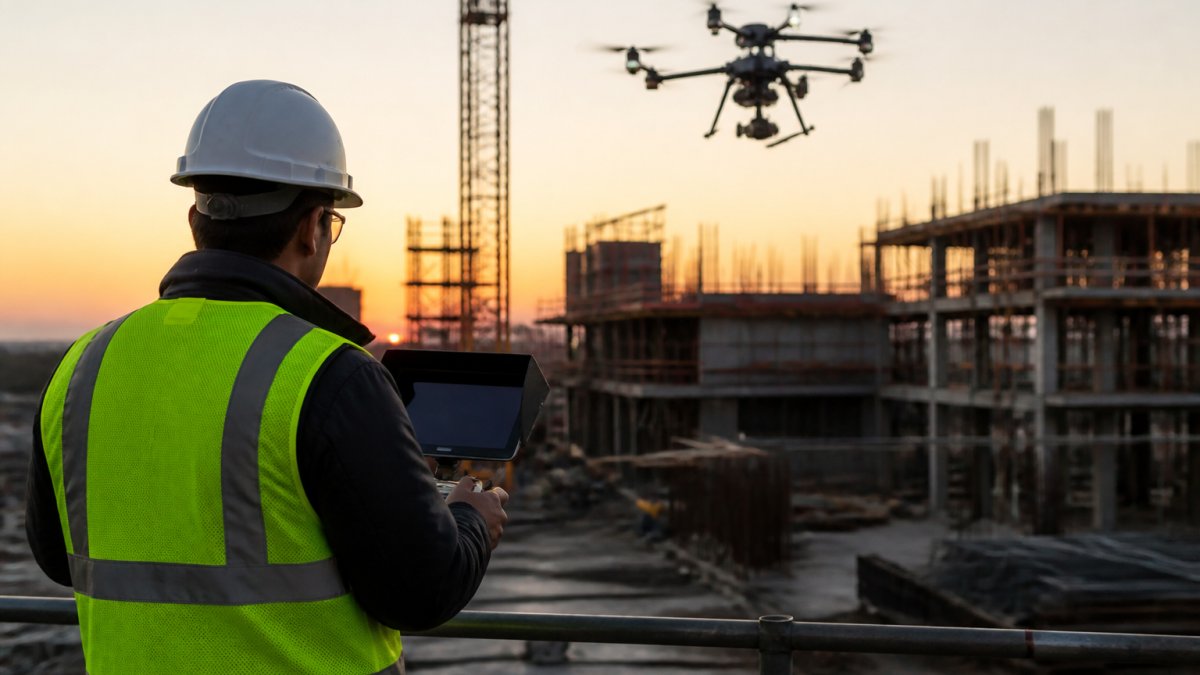
The fastest way to separate a real commercial drone operator from a hobbyist is to ask for evidence, not adjectives. Anyone can claim "cinematic quality." A portfolio of commercial productions with named clients is a stronger signal than adjectives alone.
Run this checklist before you commit:
- Ask for a portfolio of commercial projects, not just travel reels
- Confirm Transport Canada certification and current insurance
- Request references from clients in your industry
- Ask how they handle weather delays and rescheduling
- Ask who edits the footage and what the turnaround is
- Get the deliverable formats in writing before the shoot
That last point matters more than buyers expect: re-cutting footage after the fact may trigger a new invoice.
If you want to judge an operator's own commercial work directly, you can view our commercial drone video pilot offering and compare it against the criteria above.
Drone Video Production Deliverables: What Lands in Your Inbox
Deliverables are where expectations quietly diverge.
A complete delivery typically includes the following layers.
Codec and file format. Delivery codecs matter for broadcast and post-production workflows.
Color-graded files. Graded masters are ready to publish; ungraded or log footage is not.
Raw footage archive. Some projects call for original camera files so your team can re-edit later.
Delivery timeline. Confirm the delivery timeline for your package against your publication date.
For events and broadcast work, ask whether live aerial coverage is available. If real-time footage matters to your production, you can check our live drone broadcast capability and confirm it fits your timeline.
If you want to judge an operator's own commercial work directly, you can view our commercial drone video pilot offering and compare it against the criteria above.
| Deliverable | What it is | Note |
|---|---|---|
| Edited master | Primary cut in required resolution and aspect ratio | Commonly 4K UHD (3840×2160) or 1080p |
| Codec and file format | H.264 or H.265 MP4 for web and social | ProRes for editing or broadcast handoff |
| Platform cutdowns | Vertical or square crops, shorter runtimes, captions | Example: one 16:9, one 9:16, one 1:1 |
| Color-graded files | Graded masters ready to publish | Request log or raw files to grade in-house |
| Raw footage archive | Original camera files for later re-editing | A single shoot day can produce hundreds of gigabytes |
| Revision rounds | Included rounds of revisions | Confirm what counts as a revision versus new scope |
| Delivery timeline | Delivery date for your package | Confirm against your publication date, not shoot date |
Briefing BlackHawk on Your Next Aerial Project
A good brief saves everyone time. Tell us the site, the purpose of the footage, your delivery deadline, and where the final video will run.
BlackHawk Aeronautical Solutions Inc. brings more than 15 years of professional drone experience to commercial productions, led by Mat L. Matthews, an RPAS instructor, flight reviewer, and aerial imaging specialist.
When you are ready to scope your project, contact us for expert drone training and aerial solutions and we will map the right approach for your site and schedule.
Frequently Asked Questions
What should I look for when hiring a commercial drone video production company?
Start with certification: the pilot and operator should hold the Transport Canada credentials that match the flight, including a pilot certificate and, for complex operations, an RPAS operator certificate. Ask about liability insurance, flight logging, and whether they have flown in your type of environment before, whether that is an active construction site, a live event, or an industrial facility. Then ask for a sample deliverable package, not just a highlight reel, so you can see the raw footage quality, the edit, and the reporting you would actually receive.
How much do commercial drone video production services cost?
Drone video production cost varies with the number of flight days, location and travel, the crew size, camera and gimbal systems used, and how much editing and color grading you need. A single-location marketing shoot with a short edited video sits at a very different level from a multi-day construction progress package or a live broadcast. Ask for a quote broken into flight time, post-production, and any permit or travel charges so you can compare providers on the same basis. For current prices or a quote, visit the BlackHawk Aeronautical Solutions Inc. website.
What permits or approvals may be needed for commercial drone filming?
In Canada, commercial flights are governed by Transport Canada's RPAS rules. Depending on where you fly, the operator may need authorizations for controlled airspace, flights near people, or operations beyond visual line of sight. Filming on private property also needs the landowner's permission, and some sites have additional restrictions. A reputable commercial drone operator will confirm the airspace class, file the required paperwork, and build weather and site contingency into the schedule before the shoot day.
What deliverables should I expect from a professional drone video production service?
Expect more than a single video file. A full drone video production deliverables package usually includes edited video in the formats you need for web, broadcast, or social, graded stills for print and marketing, and the raw or lightly processed footage if your contract includes it. For construction and inspection work, ask for dated flight logs, geotagged imagery, and a written summary of what was captured. Confirm resolution, frame rate, and delivery timeline in writing so there are no surprises at handoff.
Choosing an aerial partner comes down to one question: can they prove they will show up, fly legally, and deliver footage your team can use without a second round of editing? That is the standard we hold ourselves to on every commercial project. Get started with BlackHawk Aeronautical Solutions Inc. and brief us on your next aerial video production, from certified flight planning through final delivery.